

 Login
Login
 Home
Home 412 Lists
 168 Reviews
 Collections
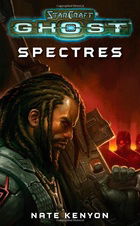
The Domain's ghosts embody the pinnacle of Earthly evolution and fitness. Empowered by technologies that harness their innate psionic potential, these lethal agents use telepathy and other superhuman powers to isolate and destroy the Dominion's enemies. But when the hunters become the hunted and the ghosts begin to vanish without a trace, even the most dangerous human soldiers in the Koprulu sector have something to fear...
Enter Nova Terra, a ghost of unparalleled skill. By order of Emperor Arcturus Mengsk, Nova embarks on a secret mission to find her missing comrades. As her investigation delves deeper into a labyrinth of dark corridors, painful memories from her pre-ghost years begin to surface. Soon, Nova discovers there may be a connection between the missing agents and her past, a discovery that will bring her face to face with both the shadows of her youth and a terrifying new breed of psionic warriors: the wraiths.
StarCraft: Ghost--Spectres review
 Posted : 8 months, 1 week ago on 17 October 2025 12:25
(A review of StarCraft: Ghost--Spectres)
Posted : 8 months, 1 week ago on 17 October 2025 12:25
(A review of StarCraft: Ghost--Spectres) 0 comments, Reply to this entry
StarCraft: Ghost--Spectres review
Posted : 8 months, 1 week ago on 17 October 2025 12:22
(A review of StarCraft: Ghost--Spectres)Legacy
It gave rise to the character Nova Terra, who became an icon of the StarCraft universe.
It inspired novels such as StarCraft: Ghost—Spectres (2010) written by Keith R.A. DeCandido.
It was Blizzard's attempt to create a more immersive cinematic and narrative universe, ahead of its time.
"StarCraft: Ghost—Spectres" is more than a canceled video game:
it's a story of power, control, rebellion, and silence, where the true enemies aren't always outside, but in the mind, in memory, and in blind obedience.
In a way, we're all a bit like Ghost or Spectre:
invisible in the crowd, obedient to a system, but with a conscience that, if awakened, can liberate or destroy.
It gave rise to the character Nova Terra, who became an icon of the StarCraft universe.
It inspired novels such as StarCraft: Ghost—Spectres (2010) written by Keith R.A. DeCandido.
It was Blizzard's attempt to create a more immersive cinematic and narrative universe, ahead of its time.
"StarCraft: Ghost—Spectres" is more than a canceled video game:
it's a story of power, control, rebellion, and silence, where the true enemies aren't always outside, but in the mind, in memory, and in blind obedience.
In a way, we're all a bit like Ghost or Spectre:
invisible in the crowd, obedient to a system, but with a conscience that, if awakened, can liberate or destroy.
0 comments, Reply to this entry
StarCraft: Ghost--Spectres review
Posted : 8 months, 1 week ago on 17 October 2025 12:22
(A review of StarCraft: Ghost--Spectres)“Ghost” and “Spectres” represent two sides of the same coin:
The Ghost: the obedient, invisible, controlled, effective agent, but without identity.
The Spectre: the rebel, the liberated psionic, but corrupted by madness and trauma.
This duality (obedience vs. freedom) is a perfect allegory of the conflict between duty and conscience, between being an instrument of power or being a force of its own.
Many fans interpret “Ghost: Spectres” as a metaphor for the political, military, and psychological control that power structures exert over individuals.
The myth of the “zero” video game
“Zero” is the key word to understand its status:
It was indefinitely canceled in 2006 after multiple delays and developer changes (Nihilistic, Swingin’ Ape Studios).
Even so, part of its code, art, and cinematics were leaked in 2020, becoming an unfinished playable relic: a “ghost game.”
That's why it's called StarCraft's "zero video game":
It's neither dead nor alive,
It's neither complete nor lost,
But its spirit continues to influence the narrative of StarCraft II, especially in the Wings of Liberty expansion, where Nova and the Spectres return in key missions.
The Ghost: the obedient, invisible, controlled, effective agent, but without identity.
The Spectre: the rebel, the liberated psionic, but corrupted by madness and trauma.
This duality (obedience vs. freedom) is a perfect allegory of the conflict between duty and conscience, between being an instrument of power or being a force of its own.
Many fans interpret “Ghost: Spectres” as a metaphor for the political, military, and psychological control that power structures exert over individuals.
The myth of the “zero” video game
“Zero” is the key word to understand its status:
It was indefinitely canceled in 2006 after multiple delays and developer changes (Nihilistic, Swingin’ Ape Studios).
Even so, part of its code, art, and cinematics were leaked in 2020, becoming an unfinished playable relic: a “ghost game.”
That's why it's called StarCraft's "zero video game":
It's neither dead nor alive,
It's neither complete nor lost,
But its spirit continues to influence the narrative of StarCraft II, especially in the Wings of Liberty expansion, where Nova and the Spectres return in key missions.
0 comments, Reply to this entry
StarCraft: Ghost--Spectres review
Posted : 8 months, 1 week ago on 17 October 2025 12:20
(A review of StarCraft: Ghost--Spectres)Although the video game was never officially released, parts of its plot survived in novels, comics, and the lore of the StarCraft II universe.
The story revolved around Nova Terra, which was tasked with investigating an internal conspiracy involving the creation of Spectres—a secret elite of Ghosts who had been "awakened" and manipulated.
The plot explored themes such as:
Mind control and the loss of free will.
The betrayal of one's own government and genetic manipulation.
The psychological toll of war and identity.
The story revolved around Nova Terra, which was tasked with investigating an internal conspiracy involving the creation of Spectres—a secret elite of Ghosts who had been "awakened" and manipulated.
The plot explored themes such as:
Mind control and the loss of free will.
The betrayal of one's own government and genetic manipulation.
The psychological toll of war and identity.
0 comments, Reply to this entry
StarCraft: Ghost--Spectres review
Posted : 8 months, 1 week ago on 17 October 2025 12:20
(A review of StarCraft: Ghost--Spectres)StarCraft: Ghost was announced by Blizzard in 2002 as a third-person tactical action game set in the StarCraft universe, but focused on a single character:
Ghost Nova Terra, a Terran psionic agent trained in espionage, sabotage, and silent assassination.
While the main titles in the series were RTS (strategic strategy games), this one sought to place the player on the battlefield from the perspective of a single soldier, exploring the covert operations of the Terran Dominion.
The Term "Spectres"
Spectres were a darker and more dangerous counterpart to Ghosts.
While Ghosts served the Terran Dominion under mind control and military discipline, Spectres were psionic rebels, freed from Dominion control by a chemical called Terrazine.
The Spectres not only had stronger psionic powers, but they were also mentally unstable, victims of trauma, manipulation, and resentment.
In a way, they were ghosts within the system, forgotten warriors, marginalized and used as weapons by darker interests
Ghost Nova Terra, a Terran psionic agent trained in espionage, sabotage, and silent assassination.
While the main titles in the series were RTS (strategic strategy games), this one sought to place the player on the battlefield from the perspective of a single soldier, exploring the covert operations of the Terran Dominion.
The Term "Spectres"
Spectres were a darker and more dangerous counterpart to Ghosts.
While Ghosts served the Terran Dominion under mind control and military discipline, Spectres were psionic rebels, freed from Dominion control by a chemical called Terrazine.
The Spectres not only had stronger psionic powers, but they were also mentally unstable, victims of trauma, manipulation, and resentment.
In a way, they were ghosts within the system, forgotten warriors, marginalized and used as weapons by darker interests
0 comments, Reply to this entry
StarCraft review
 Posted : 8 months, 1 week ago on 16 October 2025 03:11
(A review of StarCraft)
Posted : 8 months, 1 week ago on 16 October 2025 03:11
(A review of StarCraft)Tassadar fue concebido como un “Jedi trágico”
Los guionistas se inspiraron en los Caballeros Jedi de Star Wars para crear a los Templarios Protoss.
333 / 5,000
Tassadar was conceived as a "tragic Jedi."
The writers drew inspiration from the Jedi Knights in Star Wars to create the Protoss Templars.
Tassadar embodies the archetype of the wise rebel, willing to break the law for a higher truth.
His final sacrifice was one of the most moving moments in video games in the 1990s.
Los guionistas se inspiraron en los Caballeros Jedi de Star Wars para crear a los Templarios Protoss.
333 / 5,000
Tassadar was conceived as a "tragic Jedi."
The writers drew inspiration from the Jedi Knights in Star Wars to create the Protoss Templars.
Tassadar embodies the archetype of the wise rebel, willing to break the law for a higher truth.
His final sacrifice was one of the most moving moments in video games in the 1990s.
0 comments, Reply to this entry
StarCraft review
Posted : 8 months, 1 week ago on 16 October 2025 03:11
(A review of StarCraft)The Zerg are based on real biological concepts.
Their design was inspired by parasites, social insects, and mutant organisms.
The concept of "genetic assimilation" comes from evolutionary theories and films like Alien and The Thing.
Their grotesque appearance was intended to simultaneously repel and fascinate the player.
Their design was inspired by parasites, social insects, and mutant organisms.
The concept of "genetic assimilation" comes from evolutionary theories and films like Alien and The Thing.
Their grotesque appearance was intended to simultaneously repel and fascinate the player.
0 comments, Reply to this entry
StarCraft review
Posted : 8 months, 1 week ago on 16 October 2025 03:10
(A review of StarCraft)Sarah Kerrigan, the Queen of Blades, was inspired by Lady Macbeth.
Kerrigan's story arc (from betrayed heroine to avenging and tyrannical queen) is inspired by tragic female characters like Lady Macbeth and Medusa.
She was also one of the first complex and powerful female characters in video games, defining an era.
Kerrigan's story arc (from betrayed heroine to avenging and tyrannical queen) is inspired by tragic female characters like Lady Macbeth and Medusa.
She was also one of the first complex and powerful female characters in video games, defining an era.
0 comments, Reply to this entry
StarCraft review
Posted : 8 months, 1 week ago on 16 October 2025 03:10
(A review of StarCraft)The Koprulu sector has biblical and philosophical roots.
The names of several planets and figures have symbolic meanings:
Aiur (home of the Protoss) is associated with the Hebrew word "illumination."
Kerrigan comes from the Gaelic "Ciarán," meaning "dark" or "son of darkness."
Tassadar has Persian resonances, linked to "guardian" or "wisdom-bringer."
The names of several planets and figures have symbolic meanings:
Aiur (home of the Protoss) is associated with the Hebrew word "illumination."
Kerrigan comes from the Gaelic "Ciarán," meaning "dark" or "son of darkness."
Tassadar has Persian resonances, linked to "guardian" or "wisdom-bringer."
0 comments, Reply to this entry
StarCraft review
Posted : 8 months, 1 week ago on 16 October 2025 03:09
(A review of StarCraft)Terran Marines use humorous phrases inspired by war and science fiction films ("Hell, it's about time!").
The Marine's voice was recorded by Chris Metzen, one of the game's lead writers and designers.
Many Zerg were created with real animal sound effects mixed with human roars.
Protoss voices have an artificial echo to sound more "psionic" and majestic.
The Marine's voice was recorded by Chris Metzen, one of the game's lead writers and designers.
Many Zerg were created with real animal sound effects mixed with human roars.
Protoss voices have an artificial echo to sound more "psionic" and majestic.
0 comments, Reply to this entry